
The problem
The office printed work orders and handed them to crews. Crews completed the work, signed the sheets and brought them back before the office could update each record by hand. Finding out where a job stood meant asking and waiting.
What we found
Our founder identified paper handoffs and delayed status as the bottleneck, not the crews' ability to do the work. A completed job remained invisible to the office until someone returned the sheet and re-entered the details.
What we did
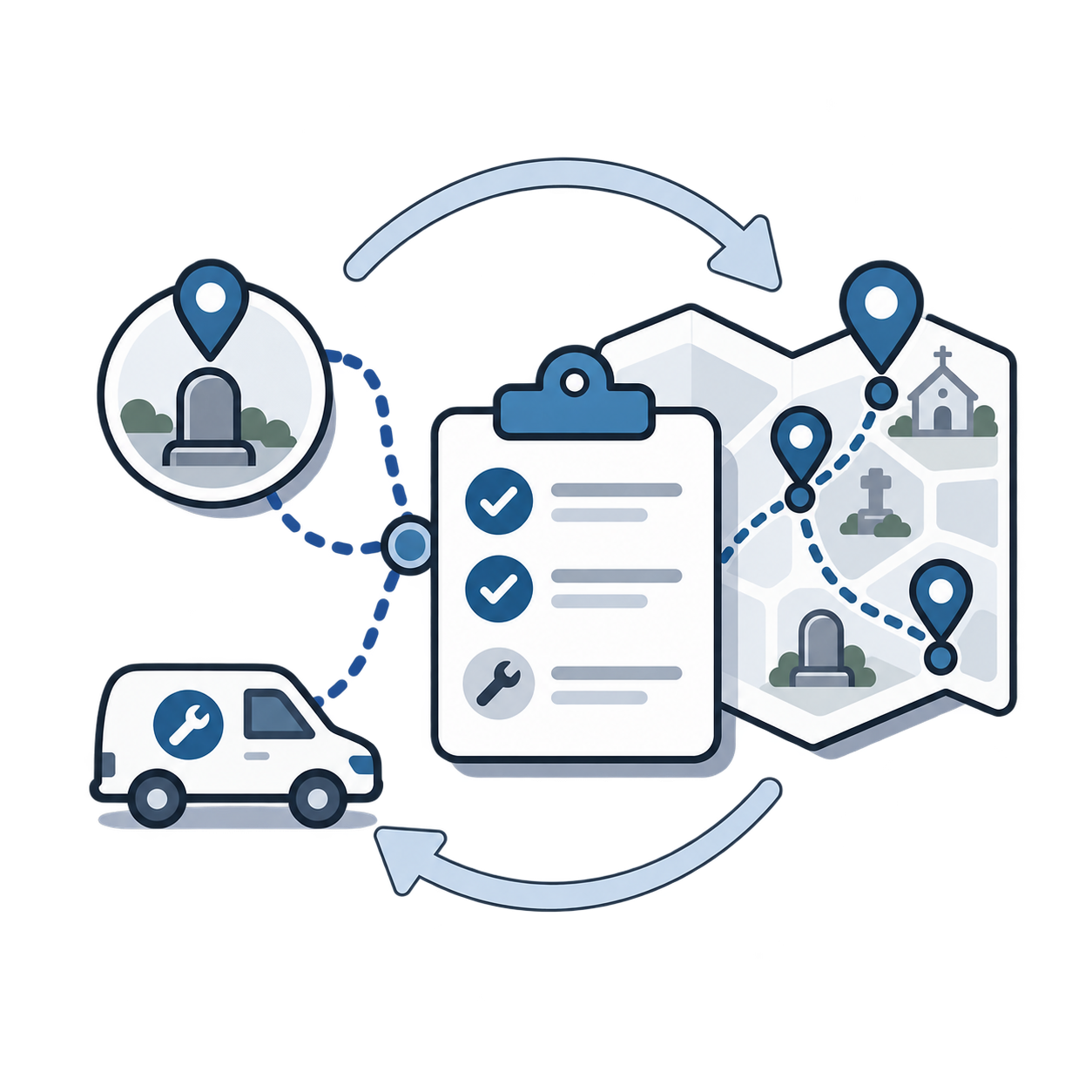
Our founder reworked how the office assigns issues and how crews document and close them. He designed and built issue tracking with field access, before-and-after photos, completion status and office notifications. Separately, he developed a mausoleum site reconnaissance and survey capability to organize site data for planning. That separate capability is not presented as a fully deployed system or a tool that generates construction plans.
Operational impact
The office can see when property issues are resolved without waiting for paper sheets or re-entering every record. Fixes close faster, status is clearer and teams spend less effort chasing updates. No measured operational impact is claimed for the separate mausoleum reconnaissance and survey capability.